125mm F/10 SCT GoTo: Setup, Alignment & First Light
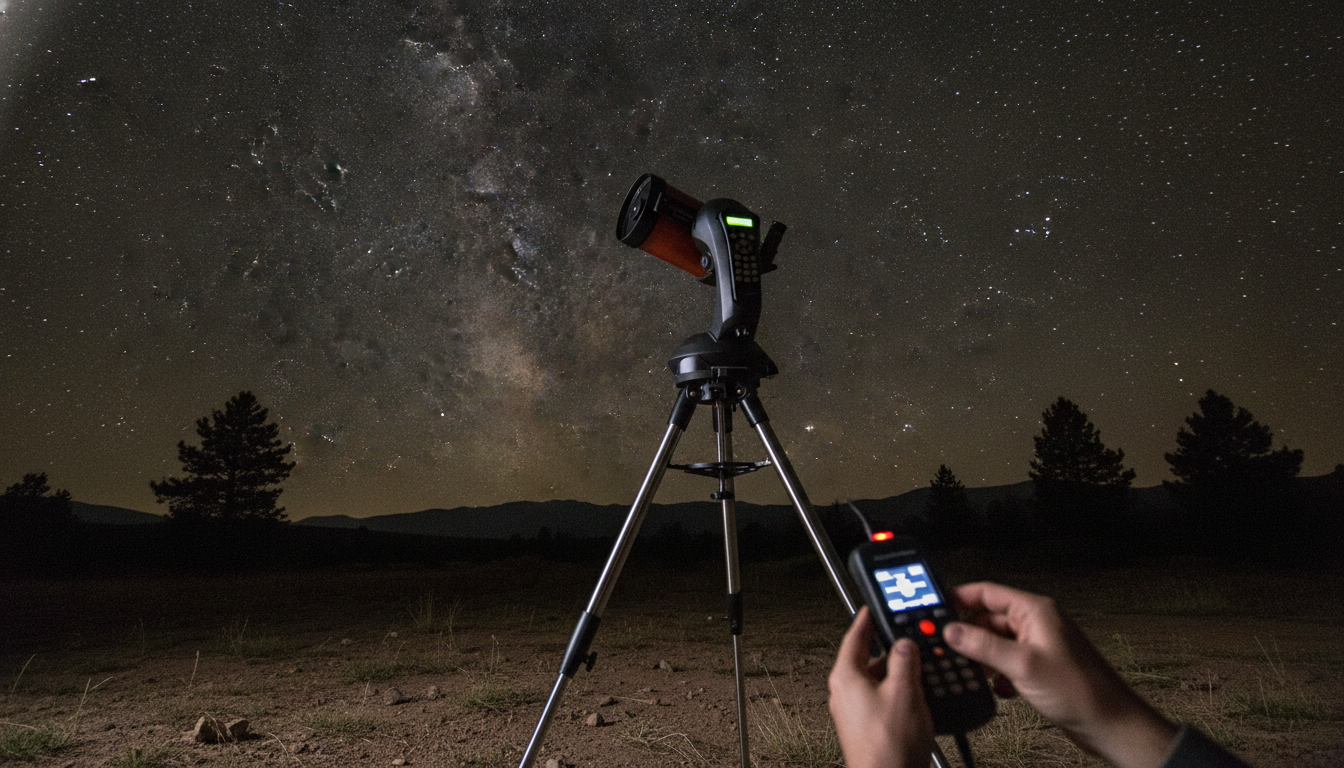
125mm F10 Schmidt-Cassegrain GoTo Telescope: What It’s Built to Do
A 125mm F10 Schmidt-Cassegrain with computerized GoTo is a classic “do-a-lot” telescope: compact enough to carry in one trip, long focal length for crisp lunar and planetary detail, and a hand controller that dramatically shortens the time between setting up and observing. With StarBright XLT optical coatings, it also aims to deliver brighter, higher-contrast views than basic-coated systems—especially noticeable on brighter deep-sky targets and on nights when transparency isn’t perfect. For more guidance, see Celestron NexStar 8SE Review: Yes, It’s Worth It! Here’s Why..
This guide covers where a 125mm F10 SCT shines, how to get a dependable GoTo alignment, what to do on first light, and how to keep performance consistent over time. For further reading, see Best Telescope 2026 | Astronomical ….
What a 125mm F10 Schmidt-Cassegrain Is Best At
- Long focal length in a short tube: An SCT packs a lot of focal length into a compact form factor, making storage and transport easier than a long refractor with similar reach.
- Moon and planets: The F10 focal ratio is naturally friendly to magnification, helping you dig into crater edges, rilles, and planetary banding when the atmosphere cooperates.
- Double stars and “detail targets”: A 125mm aperture has the resolving power to make close pairs engaging, and double stars are also a great real-world check on focus, seeing, and collimation.
- Bright deep-sky objects: Open clusters, many globular clusters, and brighter nebulae and galaxies respond well to moderate magnification with decent contrast.
- GoTo under light pollution: When star-hopping is frustrating, computerized pointing keeps the night moving—less time searching, more time observing.
- Trade-offs to expect: True field of view is narrower than short-focus refractors, and cooldown time can affect sharpness at high power (especially on planets).
StarBright XLT Coatings: What They Change at the Eyepiece
StarBright XLT coatings are designed to increase light transmission through the optical path. In practice, that tends to show up as a bit more “punch” on dimmer details and cleaner contrast on extended targets.
- Brighter, more contrasty deep-sky views: Faint outer glow in brighter galaxies and nebulae is easier to hold, especially when transparency is average rather than pristine.
- More satisfying globular clusters: Better throughput helps clusters look denser and more textured as you increase magnification.
- On the Moon and planets: The benefit is usually subtle—more tonal separation and a cleaner look, not “more magnification.”
- Still limited by seeing: Atmospheric turbulence remains the main cap on maximum useful power on any given night.
- Care basics: Use a blower first; only do gentle, optics-safe cleaning when truly needed to reduce the risk of micro-scratches.
For additional background on coatings and observing fundamentals, see Sky & Telescope’s equipment guides and NASA’s beginner-friendly skywatching resources.
Computerized GoTo and Tracking: Getting Reliable Alignment
Accurate GoTo is less about luck and more about repeatable habits. A few setup steps can turn “close enough” slews into consistent in-the-eyepiece targeting.
- Start with a stable base: Vibration is the most common reason views feel “soft,” especially above 150×. Extend tripod legs only as much as needed and tighten every clamp.
- Level and balance: A level base helps alignment routines behave predictably. Keeping the optical tube well-balanced reduces motor strain and improves tracking smoothness.
- Align with low power, refine with higher power: Use a low-power eyepiece to get alignment stars centered quickly, then swap to higher power (or use a reticle eyepiece) to center precisely.
- Confirm with a test slew: After alignment, slew to a bright object (the Moon, Jupiter, a bright star) to verify accuracy before hunting fainter targets.
- Use reliable power: Weak batteries can cause erratic slews, alignment failures, or tracking drift. A stable external power source often improves consistency.
Specifications at a Glance
These core traits shape how the telescope feels in real use—how much detail it can resolve, how easily it reaches higher magnifications, and how convenient it is to transport.
| Item | Value | Why it matters |
|---|---|---|
| Aperture | 125mm | More aperture improves resolution and pulls in more light for brighter deep-sky views. |
| Focal ratio | F10 | Comfortable for planetary magnification; generally forgiving on eyepiece performance. |
| Optical design | Schmidt-Cassegrain | Compact tube length with long focal length; versatile for many targets. |
| Computerized pointing | GoTo | Helps locate objects quickly and keeps them in view with tracking. |
| Optical coatings | StarBright XLT | Improves transmission and contrast compared with basic coatings. |
| Best-fit observing | Moon, planets, bright deep-sky | Excels at detail-oriented targets; wide-field scanning is not its main strength. |
First-Light Checklist: From Unboxing to a Clean First Session
What to Observe First (and What to Expect)
Care, Storage, and Long-Term Performance
In-Stock Picks
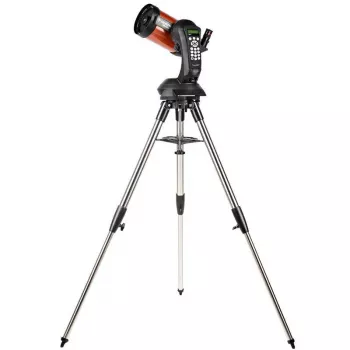
- 125mm F10 Schmidt-Cassegrain Computerized GoTo Astronomical Telescope with StarBright XLT
- Clarks Men’s Black Leather Slip-On Shoes
- Vans Women’s Black Leather Sneakers
FAQ
How long does a 125mm Schmidt-Cassegrain need to cool down before high-power viewing?
Plan on about 20–60 minutes depending on how big the temperature difference is between indoors and outdoors. High-power planetary viewing benefits the most, so it’s smart to start with the Moon or low-power targets while the optics settle.
Will GoTo still work under light pollution or when only a few stars are visible?
Yes, as long as you can identify enough bright alignment stars and your time/location settings are accurate. Light pollution can hide many reference stars, so pick the brightest available and align carefully with a clear view of the sky.
Is this telescope better for planets or deep-sky objects?
It’s especially strong on the Moon and planets thanks to its long focal length and 125mm aperture, but it can still perform well on brighter deep-sky objects like clusters and standout nebulae. Very wide-field sweeping views are not its main specialty.








Leave a comment