Mesa Lateral Smart Bedside Table: charging & calm storage
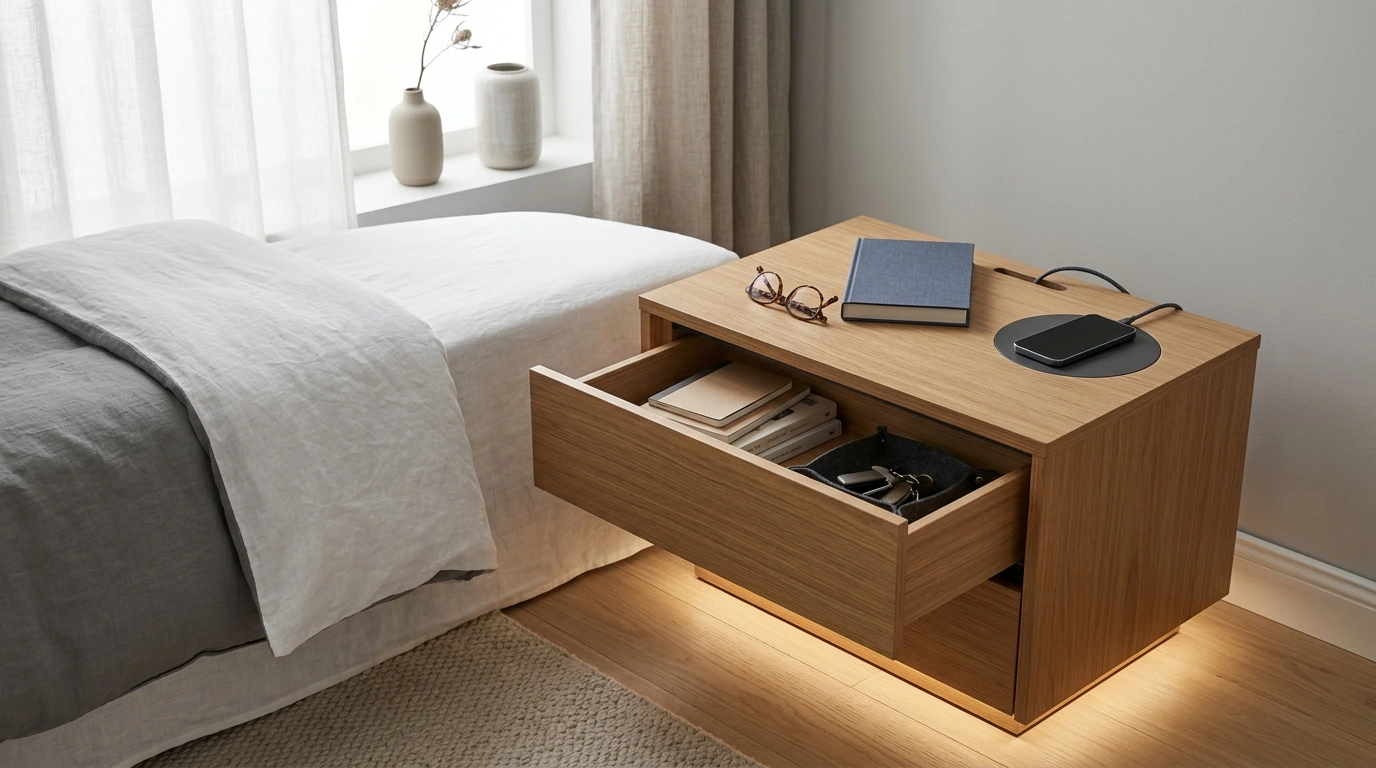
Mesa Lateral Smart Bedside Table: a smarter nightstand for modern bedrooms
A smart bedside table blends everyday storage with practical, built-in conveniences: device charging, cleaner cable routing, soft ambient lighting, and a finish that feels at home in a calm bedroom. The best choice isn’t just about looks—it’s about getting the size, power setup, materials, and placement right so it works naturally with your bed height and nightly habits.
What a smart bedside table adds to your space
- Less clutter at the bed: a dedicated spot for books, glasses, medications, and small accessories without crowding the top surface.
- Better power and cable control: charging points and (on many models) built-in cable paths to reduce tangles and “cord sprawl.”
- Nighttime convenience: gentle lighting and quick access to essentials without getting fully up.
- A cleaner look: one piece can replace separate chargers, a power strip, and even a standalone lamp depending on the setup.
Mesa Lateral Smart Bedside Table: quick look
Designed to sit beside your bed as a primary landing zone for rest-and-recharge routines, the Mesa Lateral Smart Bedside Table is worth considering if you want charging and organization to feel “built in” rather than added on. Before purchasing, confirm the product listing details—dimensions, charging type and wattage, ports, materials, color, and storage capacity—so it fits your room and your devices.
| Item | Detail |
|---|---|
| Product | Mesa Lateral Smart Bedside Table |
| Price | $1549.65 USD |
| Availability | In stock |
| Units available | 210 |
| Product page | View product |
Features to review before you decide
Wireless charging (if included)
If the table includes wireless charging, verify the standard (commonly Qi) and the charging zone placement. Qi compatibility can be confirmed through the Wireless Power Consortium. Also check wattage and whether your phone needs precise alignment—some charging pads are more forgiving than others.
Charging ports and speed
Look for how many ports you’ll actually use overnight and whether they’re USB-A, USB-C, or a mix. If fast charging matters, confirm the supported charging profile and cable requirements. For background on USB standards and certified implementations, the USB-IF is a solid reference.
Lighting that fits real nighttime use
Warm, dimmable lighting tends to be the most sleep-friendly, and accessible controls matter more than you’d expect at 2 a.m. If there’s a “night mode,” low brightness is the goal—enough to navigate, not enough to wake you fully.
Storage that matches what you keep bedside
Count drawers/shelves and think in terms of usable height: a hardback book, a tablet, a tissue box, or a small organizer tray. A great bedside table makes the surface feel open while keeping the essentials close.
Cable management and visual calm
Check for a rear pass-through, hidden channel, or interior routing that keeps cords off the floor and away from foot traffic. Even a simple opening at the back can dramatically reduce “wire clutter.”
Materials, finish, and stability
Nightstands see daily contact—rings, water glasses, lotions, chargers—so prioritize scratch resistance and easy cleaning. A stable base matters too, especially if you’ll tap buttons, open drawers quietly, or charge devices near the edge.
Quiet hardware for better sleep
Soft drawer slides, subtle buttons, and low-noise pulls are small details that make a big difference when someone else is sleeping nearby.
Measurements and fit: getting the bedside proportions right
- Ideal height: aim for the tabletop to sit roughly level with the top of your mattress (or slightly above) so you can reach items comfortably.
- Width and depth: leave clearance for drawer/door swing and enough walkway space to get in and out of bed without bumping the table.
- Outlet placement: measure the distance to your nearest outlet and plan whether the power cord will be hidden behind the headboard or along the baseboard.
- Left vs. right side: if ports or access panels are oriented, confirm they’ll face outward on your chosen side of the bed.
Setup and first-time use
Daily routines that make it feel effortless
Safety, compatibility, and care
When shopping for electronics-integrated furniture, looking for recognized safety testing and certification can be helpful. For general information on safety certification, see UL Solutions.
Who this works best for
Related in-stock picks
- Mesa Lateral Smart Bedside Table — a purpose-built bedside hub for charging and organization.
- Clarks Men’s Black Leather Slip-On Shoes — an easy-on option for quick nighttime steps or early-morning routines.
- Vans Women’s Black Leather Sneakers — a durable, everyday pair for mornings when you’re out the door fast.
What to confirm on the product page before buying
FAQ
¿Qué altura debería tener una mesa de noche para que sea cómoda?
Ideally, the tabletop should sit about level with the top of your mattress or slightly higher. Measure from the floor to the top of your mattress and compare that number to the nightstand’s listed height.
¿La carga inalámbrica funciona con funda puesta?
Sometimes—it depends on the case thickness and materials, as well as the charger’s power and design. If charging is spotty, remove thick cases or cases with metal rings and confirm your phone supports the same wireless standard (such as Qi).
¿Es seguro dejar el teléfono cargando toda la noche?
It’s generally safe when using certified chargers and undamaged cables, and when the phone can vent heat normally. Avoid covering the device, keep adapters ventilated, and don’t overload a power strip—heat and low-quality accessories are common risk factors.









Leave a comment