Durable Snuffle Mat for Dogs: Daily Enrichment Guide
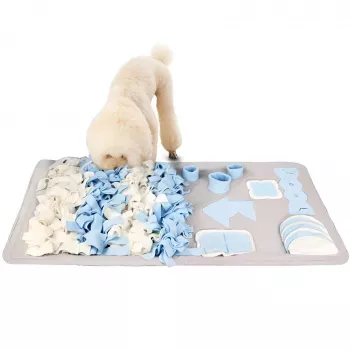
Durable Snuffle Mat for Dogs: Enrichment That Holds Up to Daily Use
A snuffle mat turns mealtime and treats into a scent-based “search” game that helps reduce boredom, slow fast eaters, and add low-impact mental exercise. The difference between a mat that’s fun for a week and one that becomes part of your everyday routine usually comes down to durability—how it’s built, how it’s used, and how it’s maintained. Below is what “durable” should actually mean, plus practical habits that help a snuffle mat stay in good shape through daily sessions.
What a snuffle mat does for dogs
Snuffle mats channel a dog’s natural desire to sniff, hunt, and work for food. Instead of eating from a bowl in seconds, your dog has to search through fabric folds to locate kibble or treats, which adds challenge without high-impact exercise.
- Encourages foraging behavior: Hiding food in fabric layers mimics “find it” games and nose work basics.
- Adds mental stimulation: Scenting and problem-solving can help reduce nuisance behaviors that pop up when a dog is under-stimulated.
- Slows down fast eaters: Spreading kibble across multiple hiding spots makes meals take longer and feel more satisfying.
- Works for many life stages: Seniors, dogs recovering from injury, and dogs on restricted exercise plans can still enjoy gentle enrichment.
Organizations like the American Kennel Club (AKC) and the ASPCA regularly highlight the value of mental enrichment for overall behavior and well-being—sniffing games are an easy way to add that enrichment at home.
What “durable” should mean in a snuffle mat
“Durable” isn’t just thicker fabric. A truly long-lasting snuffle mat is designed for repeated pawing, daily use, and frequent cleaning—while still staying safe and functional.
- Dense fabric layers + reinforced stitching: Look for tight, uniform seams and construction that resists pulling and repeated pawing.
- A sturdy base: A heavier, flatter base helps prevent curling edges and reduces the temptation to grab and shake the mat.
- Wash tolerance: Everyday mats should handle regular washing without shedding, fraying, or losing shape.
- Minimal loose pieces: The fewer dangling bits that can be tugged off, the better—especially for persistent chewers.
- Anti-slip grip: Reduced sliding keeps the game focused on sniffing rather than chasing the mat around the room.
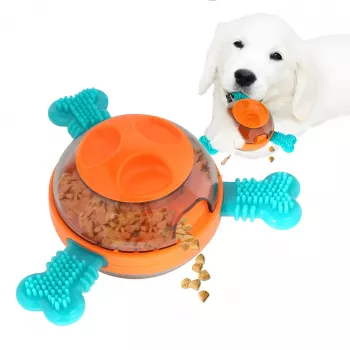
Durability also depends on using the right tool for the job. A snuffle mat is made for supervised enrichment, not for unsupervised chew time. If your dog’s default is to shred fabric, durability becomes more about choosing a different style of feeder than “finding the toughest mat.”
Quick durability checklist
Before buying (or before declaring a mat “not durable”), it helps to match the mat’s design to how your dog actually plays.
- Best use case: Daily enrichment sessions, then put away—rather than leaving it out as a chewable object.
- Match difficulty to style: Gentle sniffers can use softer folds; enthusiastic diggers do better with denser fabric and stronger seams.
- Inspect seams: Tight, consistent stitching is a good sign; loose threads are a future tear point.
- Choose the right size: A larger surface area lets you spread kibble out, which reduces frantic digging in one “hot spot.”
Durability and fit guide
| Dog behavior | Recommended mat features | Treat type that works best | Supervision level |
|---|---|---|---|
| Gentle sniffer | Standard fleece folds, moderate density | Kibble, small training treats | Light supervision |
| Eager pawer/digger | Reinforced seams, denser layers, thicker base | Kibble, slightly larger treats to reduce crumbling | Close supervision |
| Fast eater | Many small hiding spots, wider spread area | Kibble-only meals, avoid greasy treats | Close supervision until pace improves |
| Determined chewer | No loose parts, heavy base, simple layout; consider alternative feeders | Kibble; avoid brittle treats that encourage chewing | Constant supervision; remove if chewing starts |
Using a snuffle mat safely (and making it last)
Most snuffle mat damage happens when a dog switches from sniffing to chewing or shredding. A few simple habits keep the game enriching and extend the mat’s lifespan.
- Introduce gradually: Start with treats placed on top so your dog learns the “sniff to find” concept. Then tuck food deeper as they get better.
- Supervise early sessions: If chewing starts, calmly remove the mat and try again later with easier placements and shorter sessions.
- Rotate the challenge: Change where you hide kibble instead of packing it into one corner—this reduces intense pawing in a single area.
- Keep nails trimmed: Long nails snag fabric, pull loops, and accelerate fraying, especially for dogs that dig.
- Skip sticky or oily treats: Residue makes fabric grimy faster and can lead to more frequent washing (which adds wear over time).
- Stop if you see damage: If seams tear or pieces loosen, pause use until it’s repaired or replaced.
Cleaning and maintenance
Durable Snuffle Mat for Dogs: product highlights
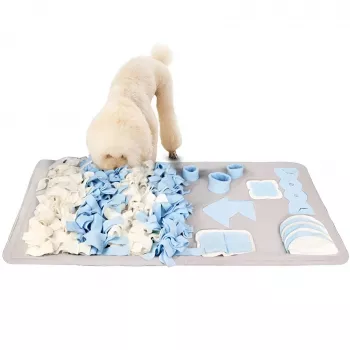
If you want enrichment that stands up to routine use, choose a mat that’s built for repeat sessions and practical care. The Durable Snuffle Mat for Dogs is designed for scent-driven enrichment that fits easily into daily feeding or treat routines.
For a small add-on that complements daily routines (especially for walk time or training), the Diamond Cuban Chain Dog and Cat Collar is another in-stock option to consider.
When to choose a different enrichment tool
FAQ
Can a snuffle mat be used every day?
Yes, daily use is common. Keep sessions short, rotate hiding spots, and remove the mat after the food is found to reduce chewing and extend lifespan.
How do dogs typically damage snuffle mats?
Most wear comes from chewing, persistent digging, and snagging from long nails. Close supervision, nail trims, and putting the mat away after use reduce damage.
What treats work best in a snuffle mat?
Dry kibble and small, low-crumb training treats work best. Avoid oily, sticky, or very brittle treats that leave residue or encourage chewing.






Leave a comment